

Top 10 Famous Scientists and Their Inventions
This universe is a puzzle that is waiting to be solved. Scientists are those people who are driven by curiosity, trying to find the missing piece to solve the mysteries or invent something we are grateful for the rest of our lives. Look around yourself, from light bulbs to medicines, airplanes to the internet, how we know our world today is because of those scientists and their inventions. Here, we discuss the top 10 scientists and how their inventions transformed the world.
The List of 10 Famous Scientists and Their Inventions
Here is the list of the top 10 famous scientists and their inventions:
1. Albert Einstein
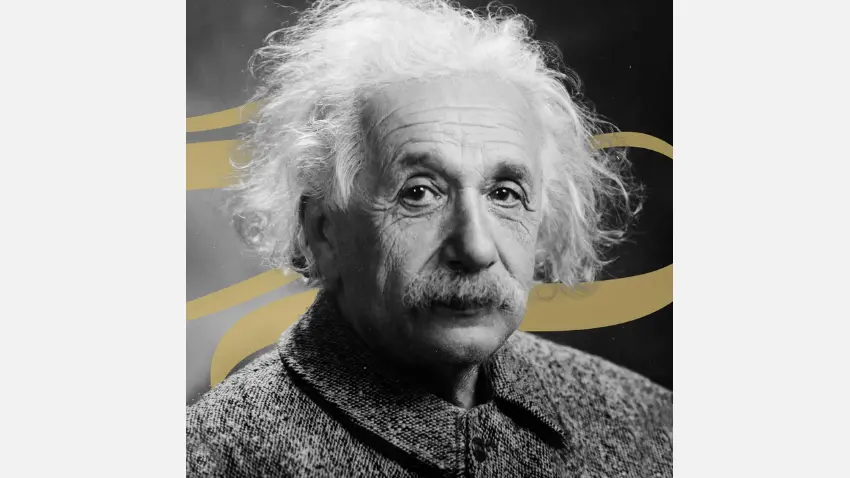
Albert Einstein, aka The Father of Modern Physics, is remembered as a scientific genius of the 20th century. He was a German theoretical physicist who introduced the formula E=mc² to demonstrate the relationship between energy (E) and mass (m).
He was awarded the Nobel Prize in Physics in 1921 for his explanation of the photoelectric effect, which played a crucial role in the development of modern physics.
Key Contributions of Albert Einstein:
- Photoelectric Effect
- Mass-Energy Equivalence (E=mc²)
- Theory of Relativity
- Brownian Motion
- Einstein-Szilard Pump
2. Isaac Newton
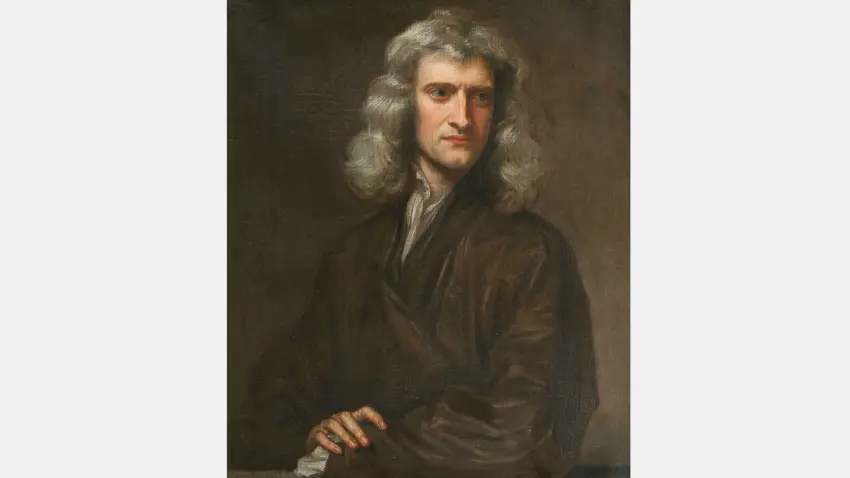
Sir Isaac Newton was an English physicist and mathematician who is considered one of the greatest scientists of all time. He is often referred to as the Father of Classical Physics.
Newton’s discovery of gravity, laws of motion, and invention of calculus played a foundational role in how we perceive and understand our world and universe. His work continues to influence modern science and technology. Thus, he is crucial to the list of famous scientists and their inventions.
Key Contributions of Sir Issac Newton:
- Laws of Motion
- Theory of Gravity
- Reflecting Telescope
- Optics and Light
- Calculus
3. Marie Curie
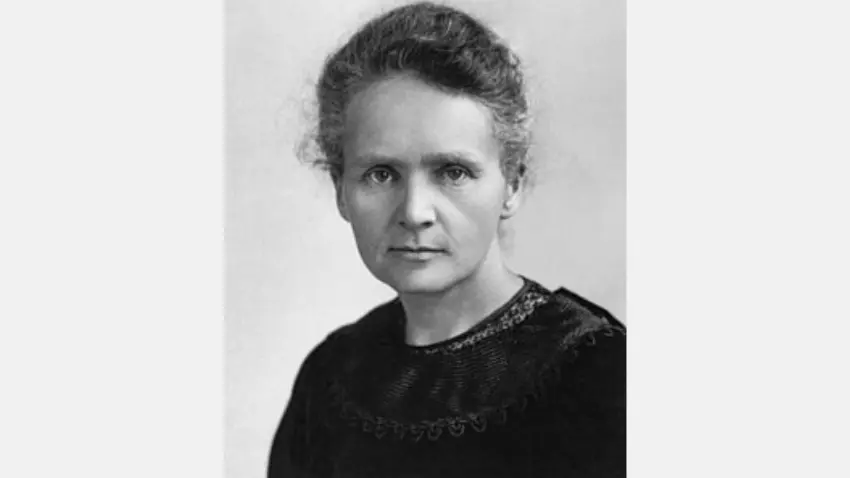
Marie Curie, also known by the name Madame Curie, was a physicist and chemist of Polish and French descent, and she was a pioneer in the field of radioactivity. Her pioneering achievements came about because of her research on radioactive elements and the discovery of radium and polonium.
She was the first woman to be awarded a Nobel Prize and the only person to be awarded two Nobel Prizes in two different fields of science: Physics and Chemistry. Her work paved the way for progress in the field of nuclear science and medicine.
Key Contributions of Madame Curie:
- Discovery of Radium and Polonium
- Theory of Radioactivity
- Isolation of Pure Radium
- Mobile X-ray Units
- Medical Use of Radioactivity
4. Nikola Tesla
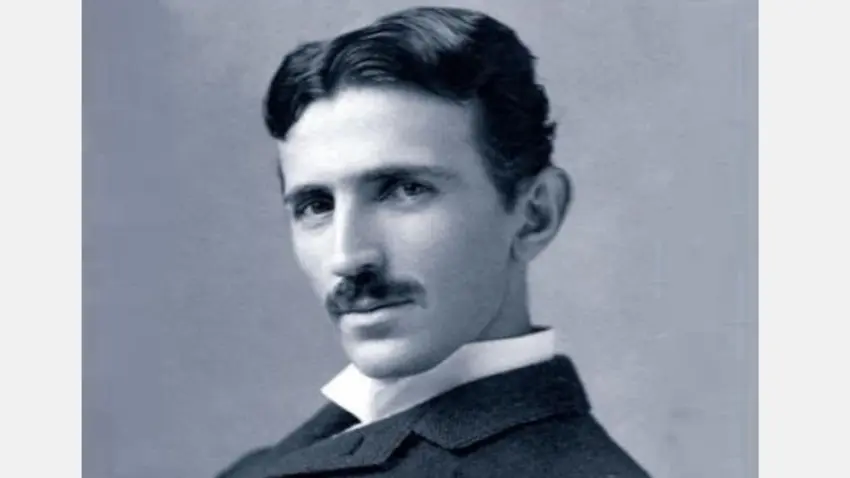
Nikola Tesla was a Serbian-American engineer and visionary inventor who played a crucial role in how we understand electricity. He is best known for his work on alternating current (AC), which revolutionized the way electricity is generated and distributed.
Tesla also contributed to wireless communication, radio technology, and early concepts of robotics. Often remembered as a genius who helped electrify the modern world, his innovations continue to influence technology today. Therefore, a major name among the list of the top 10 scientists and their inventions.
Key Contributions of Nikola Tesla
- Alternating Current (AC) System
- AC Induction Motor
- Tesla Coil
- Radio Technology
- Lighting and X-rays
- Remote Control
5. Thomas Edison
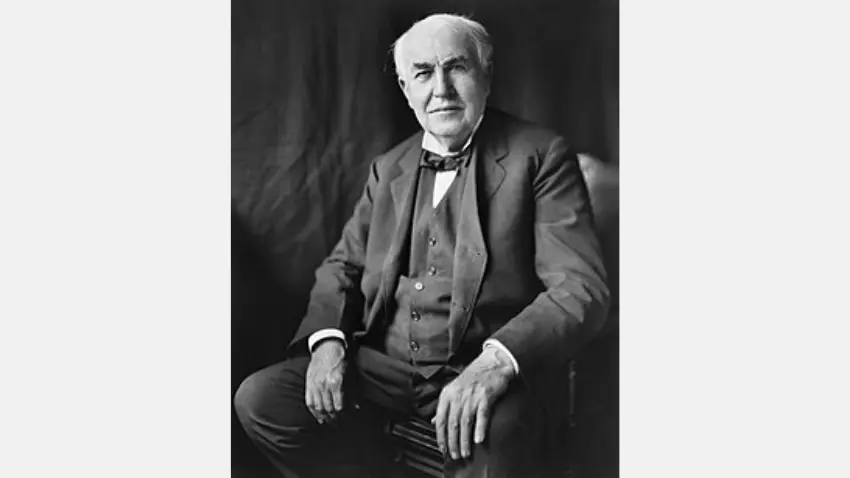
Thomas Edison, also known as the inventor of the light bulb, is another major figure in the list of scientists and their inventions. He was an American inventor and businessman who had patents for over 1,000 scientific inventions. Edison was famously known as The Wizard of Menlo Park, as he created the first industrial research laboratory.
Key Contributions of Thomas Alva Edison
- Incandescent Light Bulb
- The Phonograph
- Motion Picture Camera & Kinetoscope
- Electric Power System
- Electric Pen & Mimeograph
6. Alexander Graham Bell
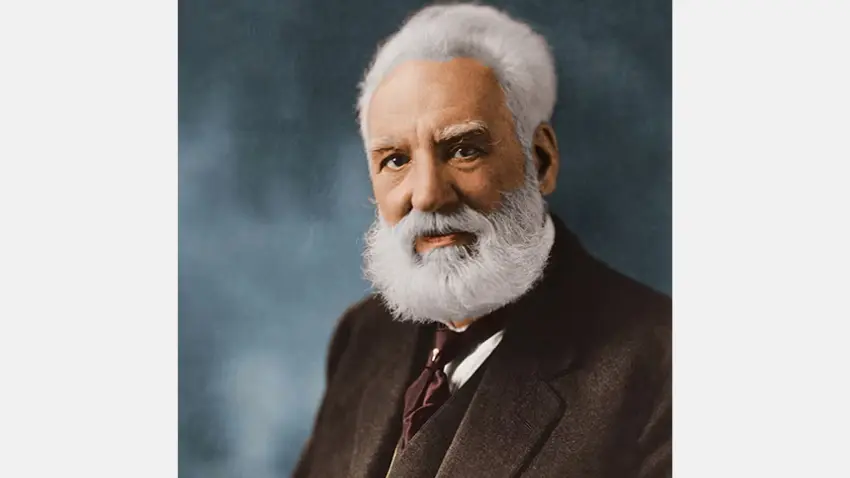
As the inventor of the first practical telephone in 1876, Alexander Graham Bell completely transformed communication throughout the world. He was a Scottish inventor, scientist, and teacher who was driven by the thought of helping deaf people, which helped him invent numerous communication tools and designs.
Later regarded as the Father of the Telephone, he contributed his life to science and teaching, inspiring the faculties of boarding schools in Dehradun.
Key Contributions of Alexander Graham Bell
- The Telephone
- Photophone
- Metal Detector
- Graphophone
- Hydrofoils & Aviation
- Audiometer
7. Charles Darwin
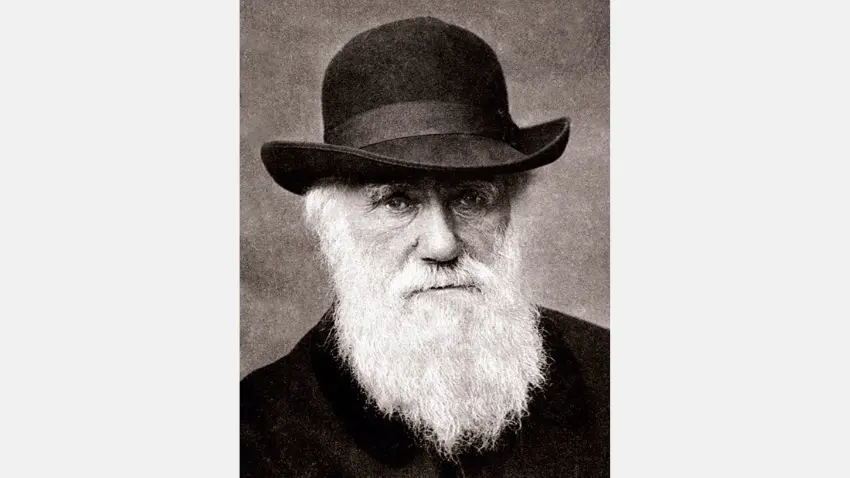
In the list of famous scientists and their inventions, Charles Darwin is considered one of the revolutionary scientists in history. He was a British scientist who developed the theory of evolution, changing the perception of how human life evolved on Earth. As the Father of Evolution, he wrote the book On the Origin of Species, in which he discussed how evolution occurred over time.
Key Contributions of Charles Darwin
- Theory of Evolution
- Natural Selection
- Botanical Studies
- Pangenesis Theory
- Pigeon Breeding Research
8. Galileo Galilei
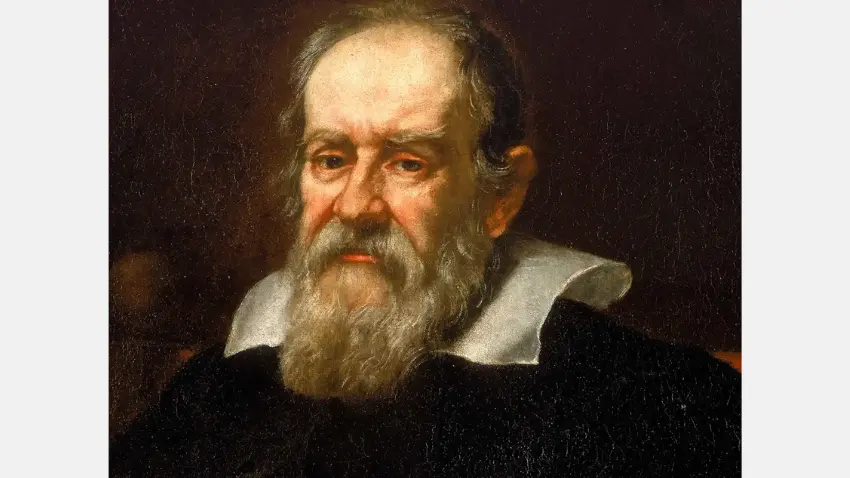
Galileo Galilei was a revolutionary Italian scientist and astronomer who vigorously supported heliocentrism (Earth orbits the Sun). He is often called the Father of Modern Astronomy, due to his discovery of Jupiter’s largest moons, an improved version of the telescope, and more.
Key Contributions of Galileo Galilei
- Improved Telescope
- Thermoscope
- Military Compass
- Pendulum Clock Design
- Hydrostatic Balance
9. Louis Pasteur
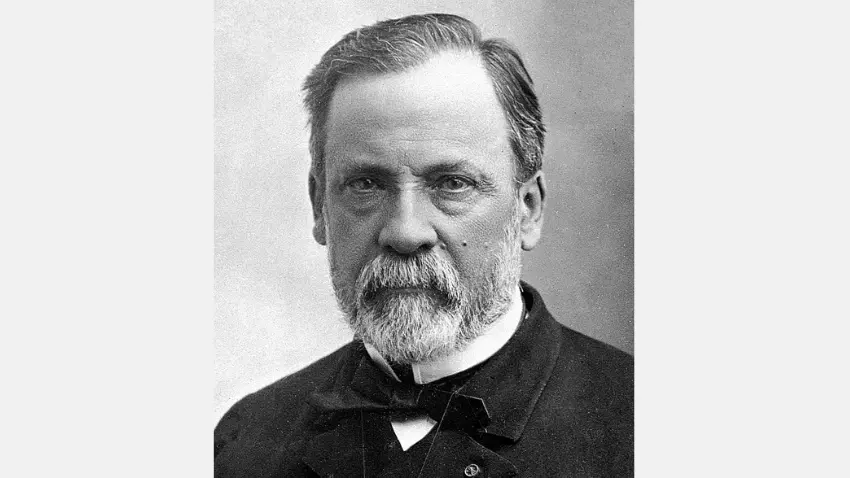
Louis Pasteur was a French chemist and microbiologist who proved that germs are responsible for spoiling food and causing diseases. He also created vaccines for deadly diseases, including Rabies, Anthrax, and Chicken Cholera. Famously known as the Father of Microbiology, his contributions are extensively studied in the renowned schools of Dehradun.
Key Contributions of Louis Pasteur
- Pasteurization
- Germ Theory of Disease
- Vaccines
- Silkworm Disease Solution
- Stereochemistry
10. Alexander Fleming
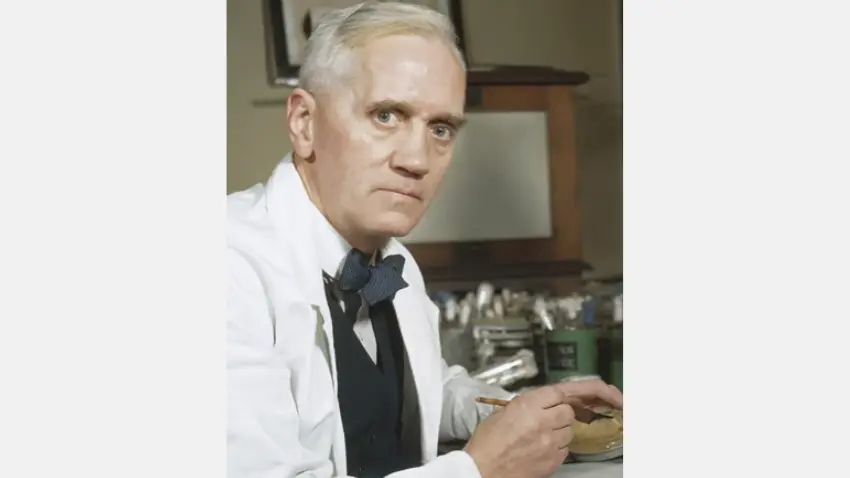
Alexander Fleming was a Scottish scientist who is also known as the Penicillin Man for discovering the first antibiotic, penicillin, in 1928. His discovery led the antibiotic revolution, helping in infection treatment and the identification of the antiseptic enzyme lysozyme. Later, in 1945, he received the Nobel Prize for his work and contributions.
Key Contributions of Alexander Fleming
- Penicillin
- Lysozyme
- Bacterial Studies & Methods
- Antiseptic Research
Conclusion
Scientists are not just ordinary people; they are curious minds that run behind why things happen in the universe. They ask questions, perform experiments, fail, learn, and move forward with new observations. This list of the top 10 scientists and their inventions explores some of the famous and significant figures in human history.
Schools of Dehradun are renowned for integrating scientific learning methods to promote creativity, critical thinking, and problem-solving.
They play a significant role in implanting the seed of a scientific curious mind into students, allowing them to explore the world with multiple perspectives. Their curriculum is designed in such a way that they are allowed to ask questions out of the syllabus and perform scientific experiments in top-tier infrastructure.
Also Read – Top 10 Freelance Ideas for Students