
Indian Students Win Earth Prize 2026 with Plas-Stick Innovation
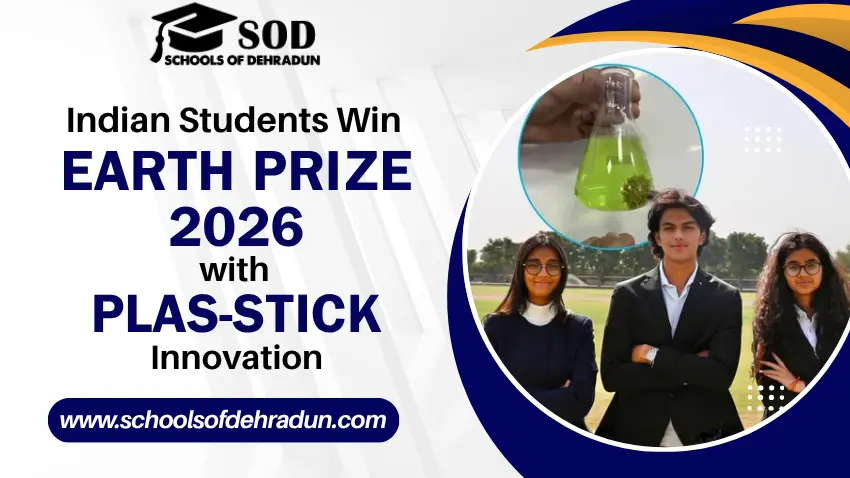
Vivaan Chhawchhaira, Ariana Agarwal, and Avyana Mehta made history by winning the Earth Prize 2026. These three 16-year-old students from Jaipur won this global title for their innovative project, Plas-Stick innovation, which makes a special powder from tamarind seeds to remove microplastics from water. The Indian trio’s innovation is a nature-friendly solution to save our planet.
Big changes indeed start with small ideas, and three young students from Jaipur, India, have proved it with their innovation. Three smart 16-year-old students named Vivaan, Ariana, and Avyana looked at a local water problem and created a special solution to solve it. They made an eco-friendly powder from old tamarind seeds that helps remove harmful microplastics from water without using expensive chemicals. Their amazing and low-cost idea, Plas-Stick Innovation, made them Earth Prize global winners this year. Read on to know more about these young kids, their efforts to save the planet, and this globally known award.
Meet Earth Prize 2026 Winning Team
| Category | Details |
| Winners | Vivaan Chhawchhaira, Ariana Agarwal, and Avyana Mehta |
| Age | 16 years |
| Hometown | Jaipur, Rajasthan, India |
| Award | The Earth Prize 2026 |
| Innovation | Plas-Stick |
| Purpose | Removes microplastics from contaminated water |
| Main Ingredient | Waste tamarind seeds |
| Power Requirement | No electricity needed |
| Additional Tool | Handheld magnet |
Three smart students, Vivaan Chhawchharia, Ariana Agarwal, and Avyana Mehta from Jaipur, won the world’s biggest environmental competition for teenagers. They created an easy way to clean tiny microplastics from water. They made history by becoming the first team from India to win the top global award.
They made a special powder from thrown-away tamarind seeds that sticks all invisible microplastics together into larger clumps. Their invention is a big motivation to students studying in schools in Dehradun, Delhi, Pune, Mumbai, and other parts across the country who want to do something valuable for their planet.

What Is the Earth Prize?
The Earth is a non-profit organization from Geneva that supports young people to find solutions for environmental problems. It was founded after the 2019 student climate protests and launched the Earth Prize, which is a global competition for students aged 13 to 19. It rewards young people for creating smart ideas to help solve problems like pollution and waste to save the planet.
Students get free learning tools and expert mentors to help build their projects. Since its foundation, more than 20,000 students from 169 countries have taken part in this competition. Winning teams and regional winners receive cash rewards to help turn their ideas into real-world solutions.
The Inspiration Behind Plas-Stick Innovation
Three Indian students won the Earth Prize 2026 by developing Plas-Stick. This affordable powder made from waste tamarind seeds removes microplastics from water. The idea for this amazing invention when they visited a rural community. The young innovators saw that families in remote areas frequently stored and shared their drinking water in large plastic containers. They observed the hidden problems and serious health risks of daily ingestion of microplastics. They teamed to create an affordable and eco-friendly solution that requires no electricity to help families who don’t have access to expensive filtration systems.
How Plas-Stick Innovation Works
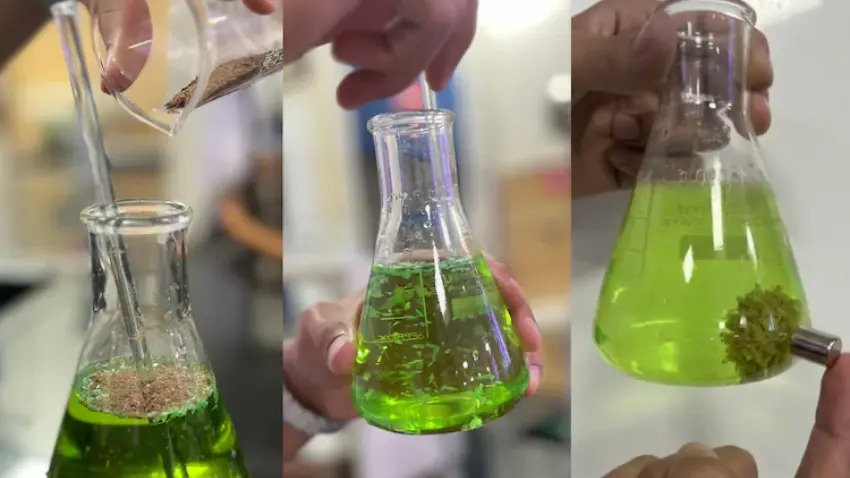
The Plas-Stick Innovation, which three teenagers from Jaipur, the winner of the prestigious global title, uses waste tamarind seeds to clean water by trapping microplastic impurities. Here is how their invention works:
- Natural Raw Material: Their amazing invention that made them winners of the Earth Prize 2026 starts with a very simple and natural item. The old tamarind seeds that we throw away, the three young inventors turned this useless garbage into a wonderful solution. They made a special powder primarily made of this item, which is completely safe to use and fully biodegradable.
- Microplastic Clumping: When this special tamarind powder is added to contaminated water, its natural properties attract and bind invisible microplastic particles into large and visible lumps.
- Magnetic Extraction: Once the invisible microplastic particles are stuck inside the big, visible clumps, cleaning them is fast and easy. You only need a normal handheld magnet to easily extract the clumped plastics from the water.
- Zero Electricity: One of the best things about Plas Stick Innovation is that it doesn’t need any electricity, batteries, or expensive machines. People living in remote villages who don’t have access to electricity can easily use this invention to make their drinking water safer and cleaner to use.



Plas-Stick Innovation: Future Plans
Invented by three 16-year-old students from Jaipur, Plas-Stick is turning farm waste into useful goods. This trio got the guidance and support to develop this invention from researchers at IIT, Guwahati. Their project has already reached and educated more than 8,000 students and teachers across government schools in Rajasthan.
They won the Earth Prize 2026 for young environmental innovators, and now they aim to help 35,000 to 40,000 people by the end of this year. Plans to build small local production centers in rural areas will make the powder easily available. Moreover, their special powder is made primarily from farm waste, so it will give local farmers a small extra way to earn money.
Young Innovators Are Building a Greener Tomorrow
The historic win of The Earth Prize 2026 by the three smart Indian teenagers proves that young minds can solve big global problems. Their simple, nature-friendly tamarind invention shows that we do not always need costly machines to save our planet. Their story inspires students everywhere, from day schools to boarding schools in Dehradun, Rajasthan, Mumbai, Pune, Bangalore, and other cities across the country. These young inventors have made India proud on the global stage, and by supporting our students, who are our future leaders, we are actually protecting our planet for decades to come.
Also Read – 10 Easy Diwali Craft Ideas for School