
What Is the Role of Education in Human Capital Formation?
The role of education in human capital formation is important. Education transforms people into skilled, productive, and adaptable workers. Human capital refers to the collective skills, knowledge, and experience that make people living in a country create economic value.
A country’s most valuable resource is people, and education is the way that turns them into powerful economic assets. When we go to school, we learn a new skill or things every day. Education teaches us how to think, innovate, and work efficiently. It gives us the knowledge and confidence to solve tough problems. Schooling doesn’t only teach us facts but also trains our minds to innovate and adapt to a changing world. Read on to learn what is the role of education in human capital formation, health’s role in human capital formation, and more.
- What Is Human Capital Formation?
What Is Human Capital Formation?
Human capital formation is the process of adding more value to people by improving their skills, knowledge, health, and abilities. Just like a country builds physical assets like factories and roads, it also needs to build its human assets. The role of education in human capital formation is very important, as when people receive better education and learn new skills, they become more productive. Human capital formation simply means turning ordinary citizens into important resources who can earn money and help the nation grow.
- Education: Formal schooling and going to college give people knowledge and help them get better jobs, make smart decisions, and earn for their families.
- Healthcare: Medical care and nutrition improve the stamina and energy of workers. This allows them to work for longer hours and increases their work productivity.
- On-the-Job Training: Companies teach workers new occupational skills, like how to use modern machines. Their special training makes workers faster and better at their jobs.
- Migration: Relocating to a new city or country allows people to access better jobs, earn much higher salaries, and learn new skills.
- Information: Access to data on available jobs and professional training helps people make smart career and investment choices for their future.
What Is the Role of Education in Human Capital Formation?
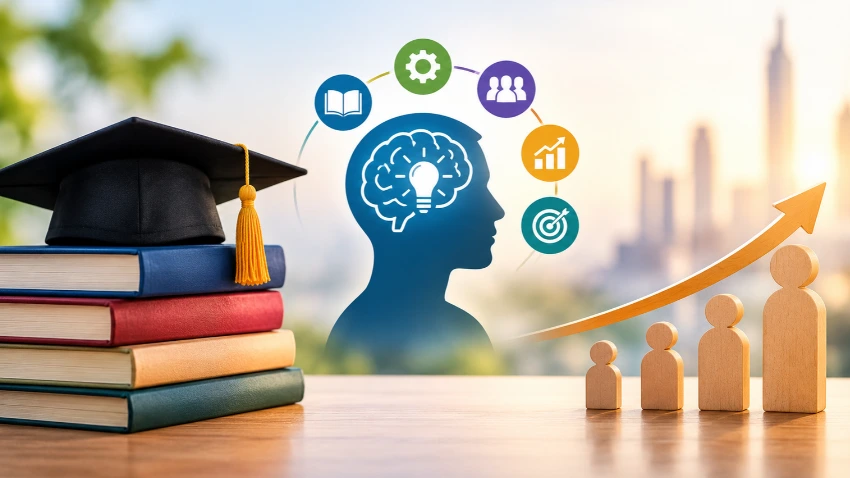
All the factors of human capital formation we discussed above are important, but education plays a key role among them. It is the main driver of human capital formation, as it gives people the tools they need to work smarter, increase earning potential, and improve overall social and health outcomes. These points will help you understand what is the role of education in human capital formation:
1. Develops Knowledge and Practical Skills
Education helps people learn basic literacy and numeracy. It also teaches them special tech and thinking skills needed to handle complex tasks and handle daily work challenges with confidence.
2. Improves Productivity and Career Opportunities
Trained and educated workers complete tasks faster with fewer mistakes. They also adapt quickly to instructions and new workplace duties. So, education makes people valuable and gives them access to better career opportunities.
3. Innovation & Technological Adaptation
Schooling teaches us valuable life skills like critical thinking and problem-solving. These help workers to learn digital tools, software, and machinery.
4. Higher Earning and Career Mobility
Having a good education and learning skills help people secure better-paying jobs. They can move out of low-wage jobs to stable careers, helping their families and building long-term financial stability.
5. Promotes Civic and Social Development
Beyond helping with economic growth, education also teaches people about health, hygiene, and their rights. They make smart choices for their families, become more engaged politically, and build peaceful, united communities.



What Is the Role of Health in Human Capital Formation?
What is the role of health in human capital formation? Understanding this is equally important, as a healthy person can work better, learn faster, and contribute more to society. When people are physically and mentally healthy, they become more productive by learning valuable skills over time.
1. Improves Learning Ability and Academic Performance
Healthy children attend school regularly and have better attendance. They can focus better on their lessons because healthy minds help them understand and remember things easily. All this leads to higher grades and helps them learn important skills they need for a successful future career.
2. Supports Physical and Mental Development
Proper nutrition and good health make sure that a person’s mind and body grow properly. Physical growth and emotional stability help people perform complex tasks without getting tired quickly.
3. Encourages Healthy Habits from an Early Age
Learning good habits, like eating well and exercising, keeps people active and prevents long-term illnesses. This helps them save money on medical care and also ensures a longer, more productive working life.
How Do Schools Contribute to Human Capital Formation?
Schools in Dehradun, Delhi, Mumbai, and other major educational hubs across India play a key role in human capital formation. They teach knowledge, help us build healthy habits, and prepare students for the workforce.
1. Quality Education and Academic Foundations
Schools teach basic and valuable life skills that help students understand the world around them better. It prepares them to deal with daily problems and learn more advanced skills in the future.
2. Sports and Extracurricular Activities
The best day and boarding schools in Dehradun, Bangalore, Mumbai, Delhi, and other main educational hubs encourage students to take part in sports and co-curricular activities. This keeps them healthy and active and teaches them how to stay disciplined, work in teams, manage time, and so much more.
3. Life Skills and Emotional Intelligence
Students also learn how to control their emotions and understand other people’s feelings in school. They learn how to communicate clearly, and these skills help them build good relationships and face difficult times independently.
4. Preparing for Higher Education and Future Careers
Teachers guide students on achieving their future goals. They offer counseling and help them prepare for the right exams or training programs. Students are taught how to use technology and modern tools in school, and this encourages their curiosity.
5. Reduction of Inequality
Schools play a key role in the reduction of inequality, as they provide every child the same chance to learn. Good education helps children from poor families learn skills they need for success. Schools give everyone an equal start no matter their background.
What Are the Challenges in Human Capital Formation?
Creating a skilled workforce is difficult because many obstacles stop people from reaching their full potential:
1. Unequal Access to Quality Education
A major challenge in human capital formation is that good schools are often costly and located in big cities, like Delhi, Dehradun, and Mumbai. So, poor children from rural areas have unequal access to the quality learning needed for good jobs.
2. Poor Health and Nutritional Deficiencies
Limited public healthcare, sanitation, and child nutrition are also major concerns, as sick and poorly nourished people can’t work effectively. This lowers the country’s overall productivity.
3. Lack of Practical and Skill-Based Learning
Boarding schools in Dehradun, Delhi, Pune, and other big cities focus on skill-based learning, but many schools only teach theory from textbooks. As students don’t learn workplace skills, they struggle to find a job after completing their studies.
4. Digital Gap in Rural Communities
Many villages in India don’t have reliable internet and digital devices. This prevents rural students and workers from learning digital skills that are very important in today’s world.
5. Financial Constraints
Poor families can’t afford the basic costs of higher education, training programs, and proper medical care. So, financial constraints affect their participation in human capital formation.
Support Your Child’s Success Through Informed Choices
Parents must understand the important role of education in human capital formation. Education teaches valuable life and modern skills that boost worker productivity and drive economic growth. It helps your child secure better jobs and improves their overall quality of life. Choose a school that supports your child’s academic, personal, and emotional growth. By making informed school choices, parents can support their child’s long-term success.
Also Read – ICSE vs CBSE: Key Differences, Benefits, and Which Board to Choose